Uncovering and clustering risk perceptions of dragon fruit farmers’ in Binh Thuan, Vietnam
Dragon fruit is regarded as a key fruit crop in Vietnam, with Binh Thuan as the country’s leading region for its cultivation. According to Binh Thuan Statistics Office (2023), the cultivated area in that year reached 26,243 hectares, with a production of 570,654 tons. Dragon fruit cultivation contributes significantly to the region’s economic development by creating employment opportunities, thereby generating income for local communities. However, the average yield in Binh Thuan was estimated at 21.6 tons per hectare, which is relatively lower than the potential yield. Notably, many dragon fruit farmers have abandoned cultivation and shifted to other crops, leading to a reduction of the cultivated area of about 14% from 2020 to 2023. This is explained by significant challenges in the dragon fruit production in Binh Thuan, linked to climate change such as extended heatwaves, heightened temperatures, alterations in precipitation patterns, and the high incidence of crop pests and diseases. Besides, market risks area also frequently reported, including fluctuations in input costs and instability in output prices. Approximately 85% of Vietnam’s dragon fruit production is exported, depending heavily on the Chinese market. This overreliance has rendered the dragon fruit market highly susceptible to external shocks, exposing it to price volatility and significant price declines. Dragon fruit farmers in this area are exposed to many risks and uncertainties impacting their livelihoods and agricultural productivity. Therefore, this study adopts a holistic approach by not only evaluating how frequent a risk might occur, its consequences, and overall severity for farmers cultivating dragon fruit, but also by providing a more nuanced understanding of the heterogeneity in risk perception. The specific objectives of this study are multifaceted: (1) to identify and uncover the sources of risk in terms of likelihood and consequence for farmers’ dragon fruit in the study area, (2) to map and rank the perceived risks using descriptive statistics and risk assessment matrices in order to differentiate sources of risk into layers based on the two dimensions of risks, (3) to explore the heterogeneity of farmers’ risk perceptions by applying clustering methods and (4) to identify factors associated with each cluster group using a multinomial regression analysis.
Through risk identification, risks were classified in eight domains: weather, biological, supply, demand, financial, logistic, operational and policy risks. While demand, biological, and supply risks are perceived to be high, logistic and policy risks are perceived low. More specifically, demand instability, output price volatility and pest and disease outbreaks were perceived as most important.
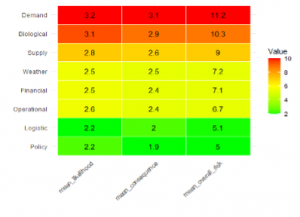
Fig. 1. Risk score heatmap of risk categories
Then, a robust approach was applied to clarify the heterogeneity by combining a hierarchical clustering method with Partitioning Around Medoids (PAM) algorithm effectively revealing distinct clusters of farmers. Three clusters were classified as follows: Cluster 1 with a “high risk perception”, Cluster 2 forms a “medium risk perception” group, and Cluster 3 with “low risk perception”. Subsequently, multinomial logistic regression was performed to identify the factors that influenced the differences between clusters. The results showed that factors associated with both the high- and medium-risk perception clusters included educational level and residence. Household size, farming experience, and certification standards significantly influenced the likelihood of belonging to the high-risk perception group compared with the low risk perception group.
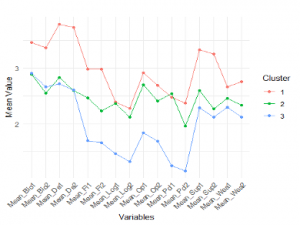
Fig. 2. Visualize the distribution of different risks across three Clusters
The implications of these findings provide valuable insights for policymakers, who developing targeted risk management strategies to mitigate the distinct risk groups that effectively address the identified risk profile. By segmenting farmers into clusters, the findings indicate the need for differentiated risk management approaches that align with the specific levels of perceived risk in each cluster. Therefore, this study provides insights that can support efforts to enhance resilience and sustainability in agriculture.
Our study has been published and presented at international conferences and in an ESCI Q1 journal [1,2].
References
[1]. Dung Thi Thuy Nguyen, Phuong Truong Thi Thanh, Stijn Speelman, Uncovering and heterogeneity in risk perceptions of dragon fruit farmers in Binh Thuan, Proceedings of the International Conference on Business and Finance 2025, pp. 391-409, ISBN: 978-632-620-975-4, December 2025.
[2]. Dung Thi Thuy Nguyen, Phuong Thi Thanh Truong, Kim My Le, Binh Tan Cao, Giang Thi Thuy Nguyen, Hang Thi Thu Su, Stijn Speelman, Identifying and clustering risk perceptions of dragon fruit farmers’ in Binh Thuan, Vietnam, Journal of Agriculture and Food Research. Link: https://doi.org/10.1016/j.jafr.2025.102570