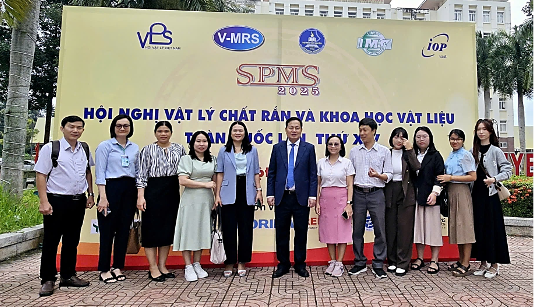
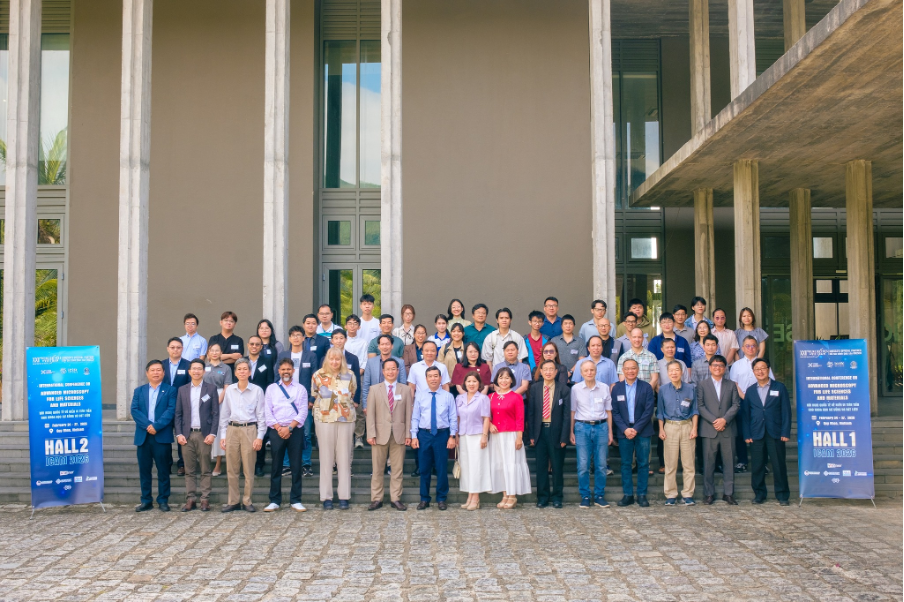
IUC QNU project in the picture in KU Leuven student newspaper
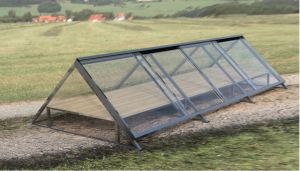
A 3D rendering of the prototype that the students will implement in Vietnam this summer.
Thanks to a collaboration between KU Leuven and Quy Nhon University, a team from the student organization Humasol will travel to Vietnam during the summer holiday. There, they will set up a solar-powered drying system for local farmers.
This summer, three dedicated students will travel to Quy Nhon, a coastal city in central Vietnam. They are not going on an exotic vacation, but with a clear purpose: to develop an efficient solar-powered drying system for local farmers.
Solar-Powered Drying System
Fre Vandersmissen, a student of Bioscience Engineering, explains that they will build upon an existing prototype: “The goal is to study the current model and optimize its performance. Once that is done, we will go to a farm in Nam Yang to assemble the improved prototype.” She continues: “The reason for developing this system is that Vietnamese farmers currently dry their products in open air. This is not hygienic and creates a risk of contamination by insects.”
Stef Michiels, a student of Engineering Science, adds: “The system protects the harvest from external threats such as insects and rainfall, while also providing better heating. This would allow crops to dry at night, which is currently not possible.”
The economic aspect is also important. Cedric Verheggen, a Master’s student in Engineering Science specializing in energy, explains: “The goal is to introduce the project on a larger scale in the Nam Yang region. Other farmers can then replicate the system and use themselves.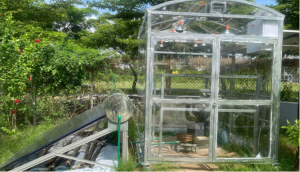
The Humasol students base their work on an existing prototype.
Humasol
The students are not carrying out this project on their own. They are supported by Humasol, an international student-run solidarity organization. Its main goal is to make sustainable technology and renewable energy accessible to people in the Global South.
“We will leave for Quy Nhon on June 30, where we will stay for a week for research. After that, we will go to Nam Yang to build the greenhouse, which is expected to take about 5 to 6 weeks,” says Vandersmissen.
“Of course, there will also be time to relax during the weekends. We plan to use that time to explore the area and go on some trips. The exact plans are still to be decided—perhaps we can ask our Vietnamese friends for suggestions,” Michiels adds with a smile.
Michiels highlights the uniqueness of the project: “What makes this project special is the collaboration with Quy Nhon University. Previously, Humasol mainly focused on installing solar panels. In this project, we want to contribute something extra, since local companies can now also install solar panels.”
Therefore, the Leuven students are working together with several Vietnamese students, who temporarily traveled to Leuven for the project. Each has a different role and academic background. For example, Linh Ngoc, an economics student, is responsible for analyzing whether the system can be marketed in the region.
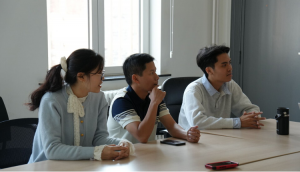
The Leuven students are working together with several Vietnamese students, who temporarily traveled to Leuven for the project.
Selection Process
To participate in the project, the Vietnamese students had to undergo a strict selection process. Last summer, they applied for this IUC (Institutional University Cooperation) project between KU Leuven and Quy Nhon University.
After interviews with several professors, including physics professor Ewald Janssens, they were selected. Janssens is one of the key figures in the project.
After the Belgian students return home from Vietnam, the Vietnamese team will take over the entire project. However, the Belgian team will continue to monitor the results online. “There is also a group chat, so we can stay in contact,” adds Michiels.
Cultural Exchange
The Vietnamese students have already had the chance to get to know the Belgian students and their student life. “They are very friendly and have already cooked delicious meals for us,” the Belgian students shared. They were also impressed by the beauty of Belgian architecture. Trung Nguyen Thanh, responsible for the digital design of the project, pointed out some differences in student life: “In Vietnam, classes start as early as 7 a.m., and students often stay in the library until 9 p.m. In some cases, even until 11 p.m.”